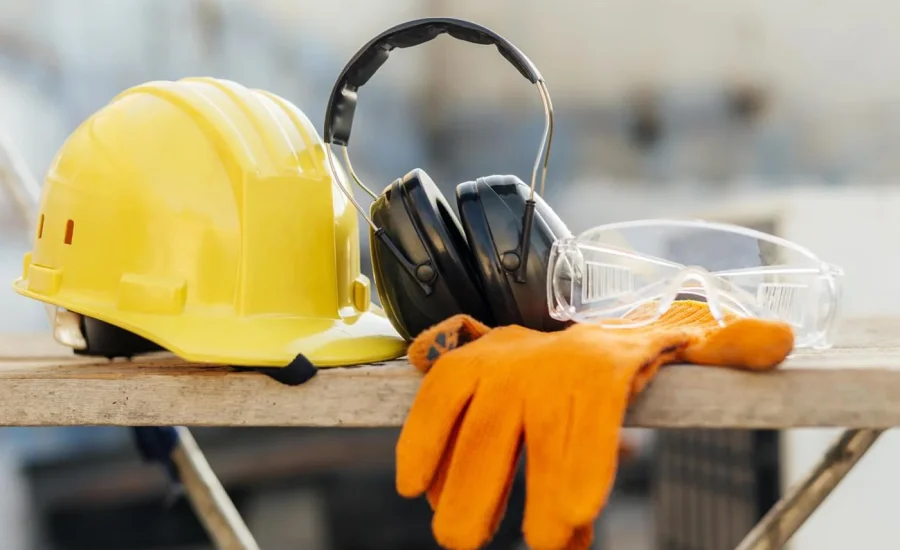
If you run a site or manage workplace safety in South Africa, buying Personal Protective Equipment (PPE) isn’t just another procurement task – it’s a legal responsibility. Section 8 of the Occupational Health and Safety Act (OHS Act 85 of 1993) requires employers to provide and maintain, as far as is reasonably practicable, a working environment that is safe and without risk to the health of employees.
The problem? Simply purchasing safety boots and high-visibility vests doesn’t automatically protect your business from liability. PPE must be suitable for the specific hazards identified in your workplace risk assessment, comply with the applicable South African or internationally recognised standards, and be properly issued, maintained, and used. Failure to meet these requirements can result in enforcement action by the Department of Employment and Labour, including improvement or prohibition notices, prosecution, and penalties imposed by the courts where non-compliance is proven.
Understanding PPE Standards
In South Africa, PPE should comply with the relevant South African National Standards (SANS) or recognised international standards such as EN or ISO, depending on the type of equipment and applicable legislation. When purchasing PPE, always ask suppliers to provide documentation demonstrating compliance with the relevant standards.
Safety Footwear (SANS/ISO 20345)
Safety footwear should comply with SANS/ISO 20345 and include impact-resistant toe caps capable of withstanding a 200 Joule impact. Depending on the work environment, additional features such as penetration-resistant midsoles, slip-resistant soles, water resistance, anti-static protection, or chemical resistance may also be required.
Respiratory Protection
Disposable respirators are not one-size-fits-all. FFP1 masks are intended for lower-risk dust exposure, while higher-risk airborne contaminants – such as respirable crystalline silica, certain metal fumes, or other hazardous particulates – may require FFP2 or FFP3 respirators, subject to a suitable risk assessment. Respiratory protective equipment should comply with the applicable recognised standards and be correctly selected, fitted, and used.
Fall Protection
Employees working at height should use full-body harnesses, shock-absorbing lanyards, connectors, and anchor systems that comply with the relevant SANS or recognised international standards. PPE should be inspected before use, undergo regular formal inspections, and inspection records should be maintained in accordance with company procedures and legal requirements.
PPE Is Your Last Line of Defence
Under South African health and safety legislation, PPE should always be the final step in the Hierarchy of Controls – not the first. Before relying on PPE, employers should first consider whether the hazard can be eliminated, substituted, controlled through engineering measures, or reduced through administrative controls. A suitable Hazard Identification and Risk Assessment (HIRA) should demonstrate why PPE is necessary.
Once PPE has been identified as the appropriate control measure:
- Ensure the correct fit: Ill-fitting hard hats, harnesses, gloves, or respiratory equipment reduce protection and are less likely to be worn correctly.
- Provide training: Employers must provide employees with adequate information, instruction, training, and supervision to ensure PPE is used, cleaned, maintained, inspected, and stored correctly.
- Maintain records: Keep documented records of PPE issue, inspections, maintenance, and employee training to demonstrate compliance.
Source PPE from Reputable Suppliers
Substandard or counterfeit PPE remains a concern in the South African market. While lower-cost products may appear attractive, equipment that fails to perform as intended can result in injuries, operational downtime, enforcement action, and significant financial losses.
When selecting suppliers, request evidence that products comply with the relevant standards and ensure they can provide appropriate technical documentation and product certifications where applicable.
At SHE Finder, we connect businesses with PPE manufacturers, distributors, safety training providers, and occupational health and safety service providers across South Africa, helping organisations find suppliers for safety footwear, respiratory protection, fall protection equipment, high-visibility clothing, and other workplace safety solutions.
Looking for PPE suppliers, accredited safety trainers, or occupational health and safety consultants in South Africa? Search SHEFinder.co.za to connect with businesses operating across all nine provinces.